SEO · 10 min read · Updated:
What is a backlink? How to earn backlinks and spot harmful ones
When another site links to you, Google sees it a bit like a recommendation. But not every recommendation is worth having, and some can even hurt.
In short
- A backlink is a link from another website to your site.
- Google uses links to discover pages and understand their importance; what counts is not the number but natural links from relevant, trustworthy sources.
- Buying links, exchanging them or using bulk link packages to influence rankings goes against Google's spam policies.
- For a suspicious link, first check the source yourself and ask the site owner to remove it if needed; Search Console's disavow tool is a last resort.
- In Heyşirket's Professional plan, the backlinks screen uses Bing Webmaster Tools data to show linking sites, new and lost links, and rule-based suspicious flags.
Whenever SEO comes up, one word always follows: backlinks. Some say “the more the better”, others get daily emails offering “1,000 backlinks”. Both can lead your business the wrong way.
In this article we explain in plain words what a backlink is, how Google judges links, how a small business can earn backlinks naturally and how to recognise harmful ones. We finish with a list of things you can do without buying links or taking risks.
Part 1 · Definition What is a backlink?
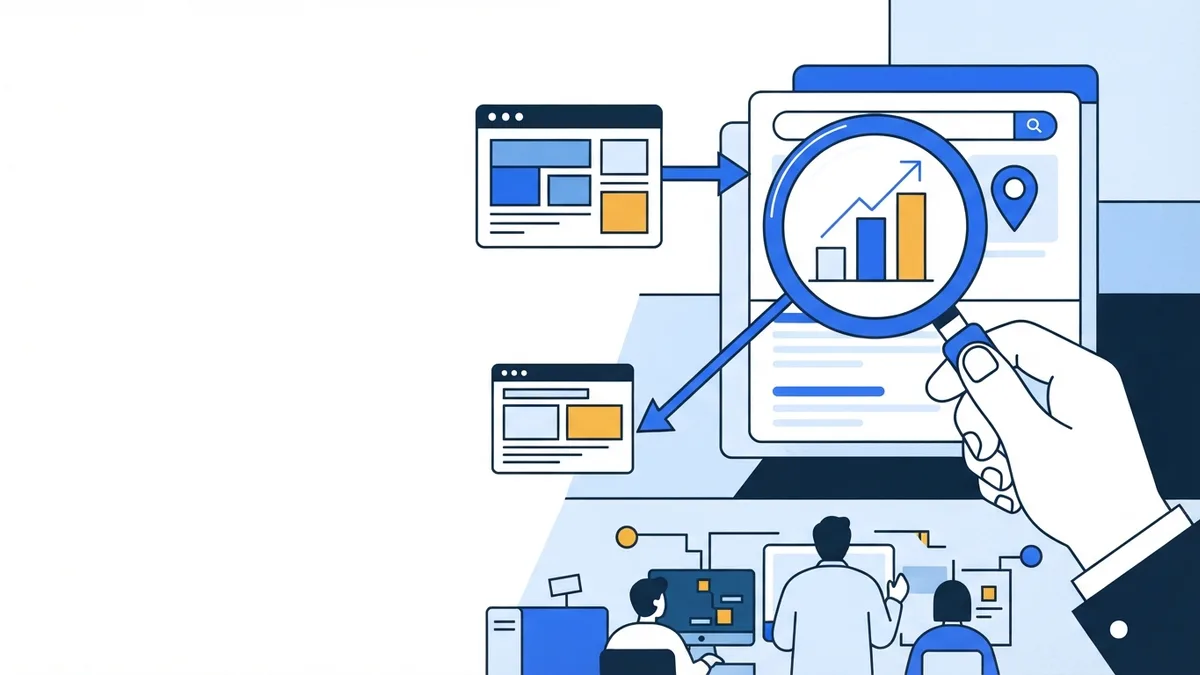
A backlink is a link from another website to yours. If a local news site mentions your business and links to your address, that's a backlink for you. Links between your own pages are called internal links.
A link has three parts. The source page is where the link sits. The target page is your page that the link leads to. The anchor text is the clickable text itself, for example “business email in Ankara”. Anchor text tells both the reader and Google what the target page is about.
Part 2 · Why Why does Google care about backlinks?
Google finds new pages largely by following links. It also treats links from trustworthy sites as a sign that a page is useful. That's why backlinks are the foundation of off-page SEO.
But Google doesn't count numbers. One link from a professional chamber in your field is worth more than links from a hundred unrelated directory sites. Google's systems also try to tell natural links from artificial ones.
| Quality | Good example | Weak or risky example |
|---|---|---|
| Relevance | Industry association, your supplier's dealer list | A site with nothing to do with your topic |
| Trust | Local news site with real readers | A site built only to sell links |
| Placement | Inside the text, in context | In a footer among hundreds of links |
| Anchor text | Brand name, address or a natural phrase | Always the same commercial keyword |
| How it was earned | Thanks to your content or your work | For money, a swap or a package |
Dofollow, nofollow, sponsored and ugc
The rel value on a link tells Google what kind of link it is. A link without one is informally called “dofollow”. rel="sponsored" is for ads and paid links, rel="ugc" for user content such as comments and forums, and rel="nofollow" for links you don't want to endorse. Google treats these values as hints. In a paid promotional article, the link should be marked as sponsored.
Part 3 · In practice How to earn backlinks: natural ways for a small business
For a small business the strongest backlinks come from relationships you already have. None of the ways below involves buying links.
Natural ways to earn backlinks
Directory and listing entries
Appear in the business directories of your professional chamber, industry association and municipality with the correct name, address, phone and website. These listings matter for local SEO too; the full list is in the local SEO checklist. Make sure the website address on your Google Business Profile is correct as well: how to set up a Google Business Profile.
Suppliers and partners
Give the brands you work with your details for their “authorised dealers”, “references” or “partners” pages. If the relationship is real, the link is natural.
Local press and events
Share real news, such as an opening, a new service, a donation or a sponsorship, with local news sites. A newsworthy event brings links on its own.
Write content worth citing
Write the clearest guide to a frequently asked question in your sector, a checklist or a worked calculation. Other sites link to you when they cite it.
Unlinked mentions
Look for news and articles that mention your name without a link, and politely ask the site owner to add one.
Reclaim broken links
If links to your old addresses now hit a 404 error, redirect those addresses to your new pages with a 301. The value of the link isn't lost.
Part 4 · Anchor text What should anchor text look like?
The anchor texts of natural links are mixed. Some use your brand name, some your address, some say “here”, and some use a phrase that describes the topic. That mix shows Google the links were given freely. If all your links use the same commercial phrase, such as “cheapest web design Istanbul”, it doesn't look natural and counts as a sign of over-optimisation.
| Type | Example | Note |
|---|---|---|
| Brand | Example Accounting | The most natural type; most should be this |
| Address | exampleaccounting.com | Common in directories and lists |
| Generic | here, visit the site | Harmless, but says nothing about the topic |
| Keyword | bookkeeping service in Ankara | Valuable, but shouldn't always be the same |
Don't insist on anchor text when asking for a link. Give the other side your page name and address and leave the rest natural. In your own internal links, use clear phrases that describe the page's topic; we explain how to choose them in keyword research.
Part 5 · Risk What is a harmful backlink and how do you spot one?
A harmful backlink is a link created to manipulate rankings, or one from a site with unwanted content. Some warning signs:
- The source site's name or the anchor text contains unwanted words such as gambling, adult content or fake medicine.
- Bulk link or directory pages listing hundreds of unrelated links in a row.
- Sources opened by IP address instead of a domain name, or with very long or heavily hyphenated names.
- Thousands of links from one site to every page of yours.
- More than half of your anchor texts being the same commercial phrase, in other words over-optimisation.
Part 6 · Warning Why is buying backlinks risky?
Offers of a “guaranteed first page” or “1,000 quality backlinks” usually rely on networks of sites built to sell links. Google works to recognise these networks. At best, nothing happens, because Google ignores those links. At worst, a manual action is applied to your site and your rankings drop.
Part 7 · What to do Should you disavow harmful links?
For most sites, no. Google largely ignores random spam links on its own. The disavow tool in Search Console is recommended only if you have many artificial links and they have caused, or you believe they will cause, a manual action. Misusing it can also remove the effect of valuable links.
- Open the source — Is it a real site?
- Read the context — Why does it mention you?
- Ask for removal — Write to the site owner
- Last resort — Search Console disavow tool
Part 8 · Product Tracking backlinks in the company panel
In the Heyşirket company panel, the SEO › Geri bağlantılar (Backlinks) screen shows who links to your site. The data comes free of charge from Bing Webmaster Tools; you connect the site to Bing once on the SEO › Bağlantılar (Connections) screen. On the screen you see:
- Linking sites and your most linked pages.
- New and lost links: links gained and lost in the last 30 days. If a valuable link disappears, you can ask the site owner to restore it.
- Anchor text types: the split between brand, address, generic (“click here”) and keyword anchors.
- Links flagged as suspicious: flagged by rules such as an unwanted content word, a link directory, an IP-address source or an overly repeated commercial anchor. Flags are for you to review; the panel never disavows a link on its own.
- Internal links: orphan pages that no page links to, and deep pages more than 3 clicks from the home page. The internal link map needs a completed site audit.
The backlinks screen is in the Professional plan. If you'd rather not do link building yourself, in the Premium plan our team does the backlink work: we work regularly on quality sources that could link to your site. We don't buy link packages and we don't guarantee rankings; you see what we did in a monthly report. Details on the SEO service and SEO tools pages. Step-by-step in the panel: Help › SEO centre.
Backlink checklist
- I'm listed with correct details in chamber, association and local directories.
- I asked suppliers and partners for a link where they mention me.
- I have at least one guide other sites could cite.
- I redirected links to my old addresses to new pages with a 301.
- I ask for links in paid promotions to be marked as sponsored.
- I haven't bought link packages or swapped links.
- Once a month I review new, lost and suspicious links.
What is a backlink?
A backlink is a link from another website to your site. Google uses links to discover new pages and to understand how useful a page is.
How do you earn backlinks?
Listing in professional chamber and industry directories, appearing on supplier and partner sites, sharing real news with the local press and writing guides others can cite are the safest ways.
Can harmful backlinks penalise my site?
Google ignores most random spam links on its own. The risk usually comes from the site itself buying links or joining artificial link networks, in which case a manual action can be applied.
Is buying backlinks illegal?
It isn't a legal ban, but buying links to influence rankings goes against Google's spam policies. In a paid promotion the link should be marked rel="sponsored" or rel="nofollow".
What's the difference between dofollow and nofollow?
A link without a rel value is informally called dofollow and passes to Google as a normal recommendation. The nofollow, sponsored and ugc values say the link isn't endorsed, is paid, or is user content; Google treats them as hints.
See your backlinks Track linking sites, new and lost links and your orphan pages on one screen. Open backlinks
Author: Heyşirket Editorial Team