Accounting routines · 18 min read · Updated:
Year-end closing guide: what to do before and after 31 December
A month-end close tidies up the month; a year-end close seals an entire year into the balance sheet and sets the opening figures for the new one. In this guide we plan the four weeks around 31 December, one by one.
In short
- On top of the month-end checks, a year-end close includes a stock count, customer and supplier account reconciliation, a review of doubtful receivables, depreciation and valuation, and its results become the next year's opening balances.
- The physical stock count should be done as of 31 December, and any difference between the recorded and the counted quantity should be documented together with its cause.
- Under Article 323 of VUK (Tax Procedure Law), a provision can be set aside in the year they become doubtful for trade receivables that are in litigation or enforcement, or that are small and remain unpaid despite being requested in writing more than once.
- In 2026 the threshold for fixed assets that can be expensed directly is 12,000 TL excluding VAT; assets above this amount are expensed through depreciation.
- Under Law No. 7571, balance sheets dated 31 December 2026 will not be subject to inflation adjustment, with some exceptions.
On the morning of 2 January, a short message arrived from Okan Bey, Atlas Kahve's mali müşavir (certified financial advisor): "How many kilos of beans are in the warehouse?" The records showed 1,140 kilos. But nobody had counted on 31 December, and three shipments had gone out during the holiday week. Finding the right answer took two days.
Most year-end closing work can be done in January, but some of it can only be done on 31 December, and if you miss it there's no going back. By the end of this article you'll know which task belongs to which week, and you'll hand your mali müşavir a complete file in the first week of January.
Part 1 · Scope How is a year-end close different from a month-end close?
A year-end close is the work of completing twelve months of records and finalising the balance sheet by counting, reconciling and valuing stock, receivables, payables, fixed assets and cash as of 31 December. A month-end close makes sure the month's records are complete; a year-end close proves that those records reflect reality.
Everything you do each month still applies at year-end: issuing invoices, entering expenses, bank reconciliation, the KDV (VAT) check. We covered these step by step in the month-end closing checklist article. Year-end adds five extra layers on top of that list.
| Task | Month-end | Year-end |
|---|---|---|
| Completing invoice, expense and collection records | Yes | Yes |
| Checking bank and cash balances | Comparison with statements | Comparison with statements plus a physical cash count on 31 December |
| Stock | Checks on critical products | Full physical count in every warehouse |
| Customer and supplier accounts | Following up overdue balances | Written reconciliation with customers and suppliers |
| Doubtful receivables | Usually none | Review of receivables in litigation or enforcement |
| Depreciation and valuation | Usually none | Fixed assets, foreign-currency items, stock valuation |
| Preparing for the new period | None | Ledgers, numbering, budget, permissions |
- December, week 2 — Missing records and reconciliation
- December, week 3 — Review receivables and assets
- 31 December — Stock and cash count
- January, week 1 — Valuation and handover
- January, week 2 — Opening the new year
In the middle of the calendar sits one day that can't be moved. Let's start there.
Part 2 · Inventory How do you do a year-end stock count?
A year-end stock count means physically counting all goods in your warehouses as of the last day of the accounting period, comparing them with the recorded quantities and correcting the differences. The stock value on the balance sheet, and therefore the year's profit, depends on this count.
Planning count day
Assign count teams and warehouses
Assign one person to count and one to check for each warehouse. At Atlas Kahve, the Kadıköy Roastery and the Ümraniye Warehouse are counted on the same day by two separate teams.
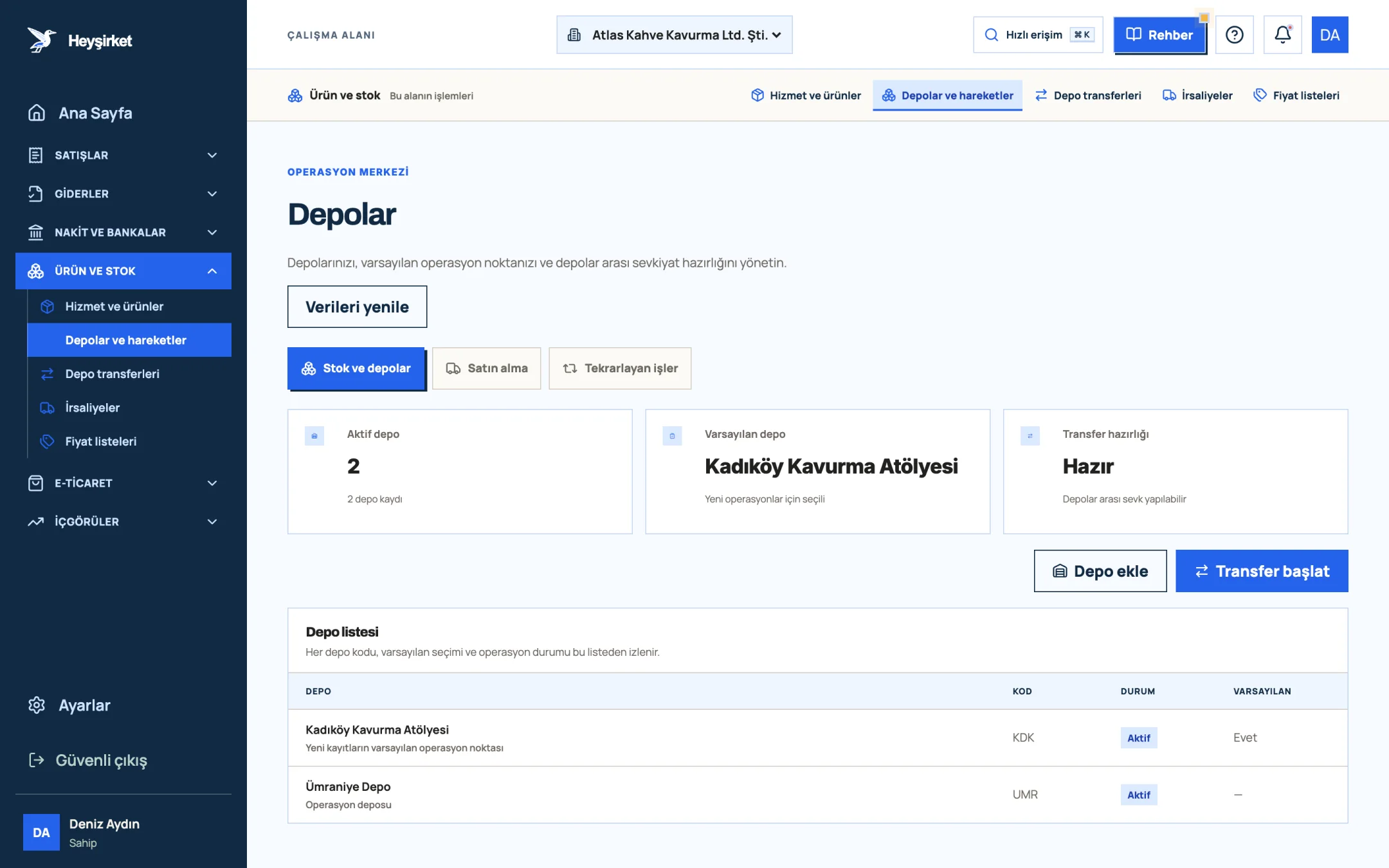
Assign count teams and warehouses - 1. Add warehouse
- 2. Start transfer
- 3. Default warehouse
- 4. Warehouse list
Pause shipments and warehouse transfers
No goods should come in or go out during the count. Complete pending warehouse transfers and draft delivery notes before the count, or leave them until afterwards.
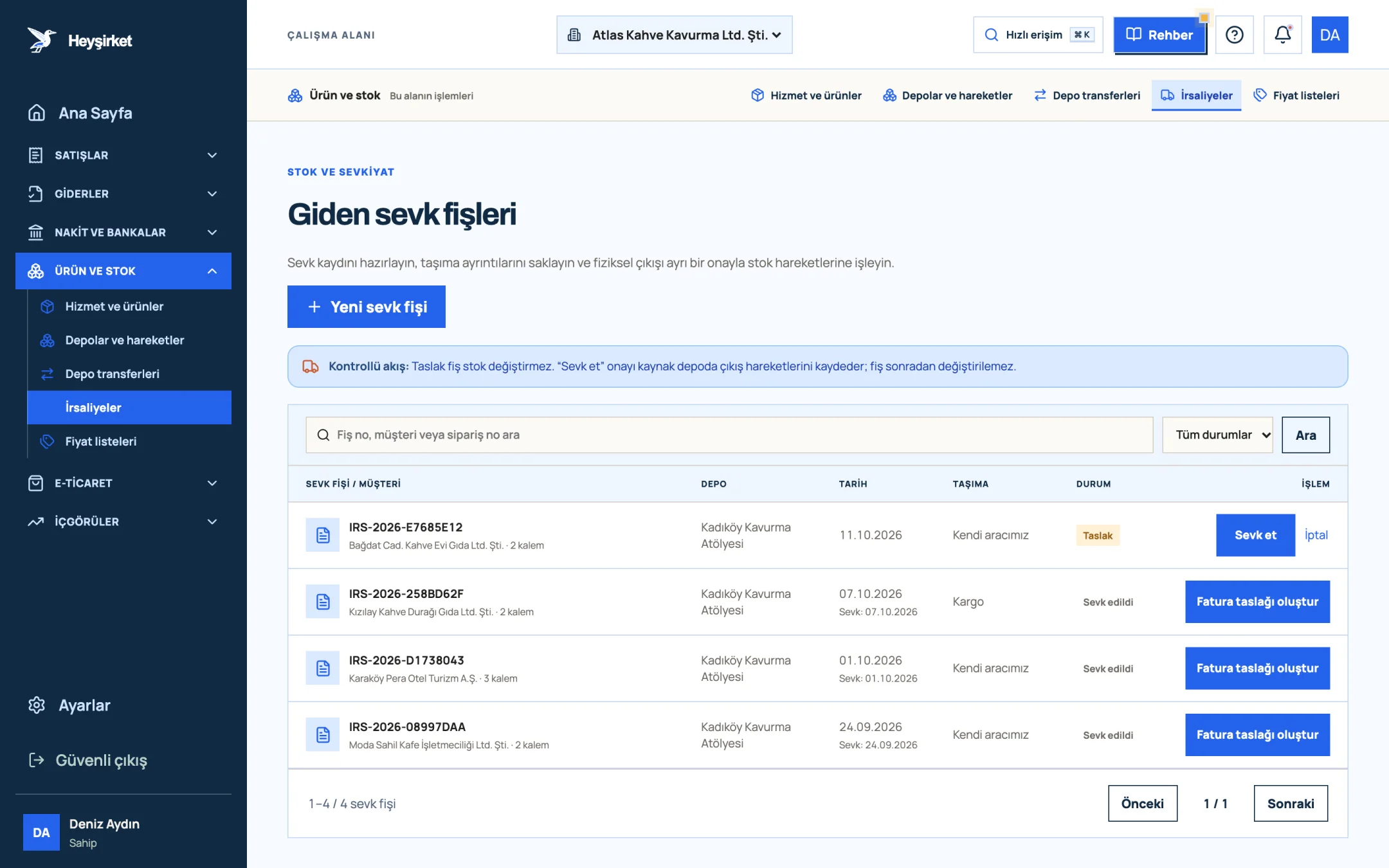
Pause shipments and warehouse transfers - 1. New delivery note
- 2. Shipping a draft note
- 3. Invoice draft from a shipped note
- 4. Controlled flow info
Enter the count in the system on the same day
In the Operations hub, open the Stock count window on the Stock and warehouses tab, choose the warehouse, enter the quantities you counted and save with Complete count. The count date is set to that day and can't be changed, which is why it matters that you enter the count on 31 December.
Review the differences
Differences are posted to stock movements as a Count adjustment. Note the cause of any large difference (wastage, a recording error, loss) and share it with your mali müşavir.
| Espresso Blend 1 kg: recorded / counted | 240 / 228 packs |
|---|---|
| Shortfall | 12 packs |
| Unit cost | × 620 TL |
| Espresso Blend difference | 7,440 TL |
| Green bean roasting loss (not recorded) | + 9,800 TL |
| Total decrease in stock value | 17,240 TL |
The figures are illustrative. Normal losses such as roasting loss and unusual shortfalls can be treated differently for tax and accounting purposes; discuss how to document them with your mali müşavir.
The goods in the warehouse are counted. Now on to something harder to count: what others owe you, and what you owe others.
Part 3 · Reconciliation Why does reconciling receivables and payables become essential at year-end?
Account reconciliation (cari hesap mutabakatı) is written confirmation with customers and suppliers that both sides show the same balance as of a given date. A year-end reconciliation proves that the receivables and payables on your balance sheet also match the other party's records.
A balance sheet without reconciliations is weak in the first tax audit or the first commercial dispute. Most mismatched balances come from ordinary causes: an invoice that never reached the other party, a bank transfer posted to the wrong account, an unrecorded return.
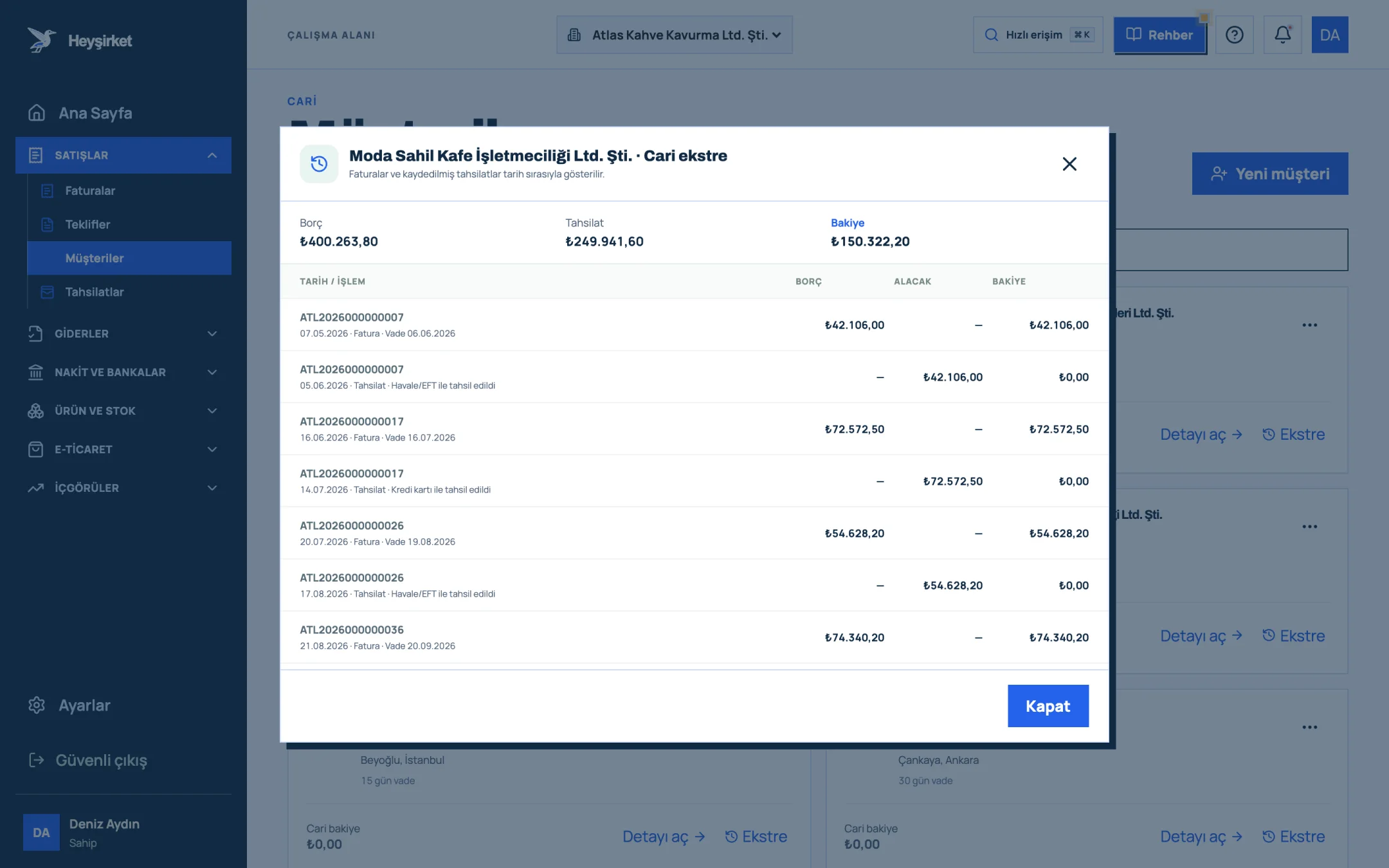
- 1. Account statement window
- 2. Statement transactions and balance
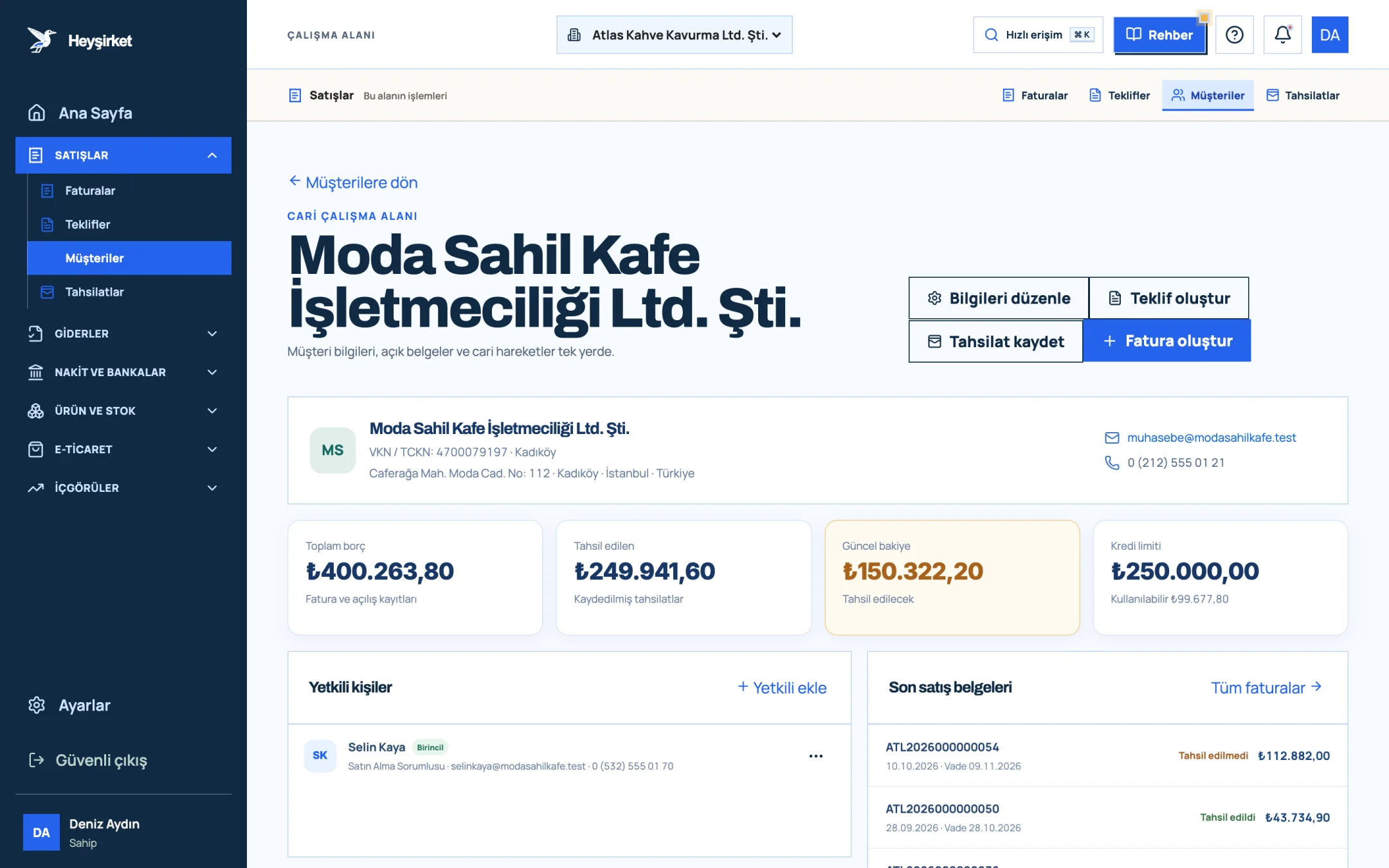
- 1. Quick actions (Create invoice, Record collection)
- 2. Current balance
- 3. Credit limit
- 4. Recent sales documents
- Fix the date: all reconciliations are based on the 31 December balance.
- Prioritise: start with the customers and suppliers with the largest balances, then the rest.
- Don't forget suppliers: the Supplier balances table on the Purchasing tab of the Operations hub shows each supplier's Remaining balance and Statement.
- Document the differences: write down the cause of each difference and the entry that closed it.
We explained in detail how to prepare a reconciliation letter and what to do when a difference appears in the account reconciliation article. During reconciliation you'll notice that some customers neither reply nor pay. They need a separate decision.
Part 4 · Risky receivables When is a provision for doubtful receivables set aside?
A provision for doubtful receivables (şüpheli alacak karşılığı) is the amount set aside as an expense at year-end for trade receivables that are unlikely to be collected, provided the conditions in the law are met. The aim is to avoid carrying an uncollectable receivable at its full value on the balance sheet and to be able to deduct this loss from the tax base.
That last sentence is critical at year-end. If you started enforcement proceedings on a receivable in November and don't set aside the provision in that year's balance sheet, you may lose the right the following year. So in the third week of December, give your mali müşavir this list: receivables in litigation or enforcement, their dates and their security status.
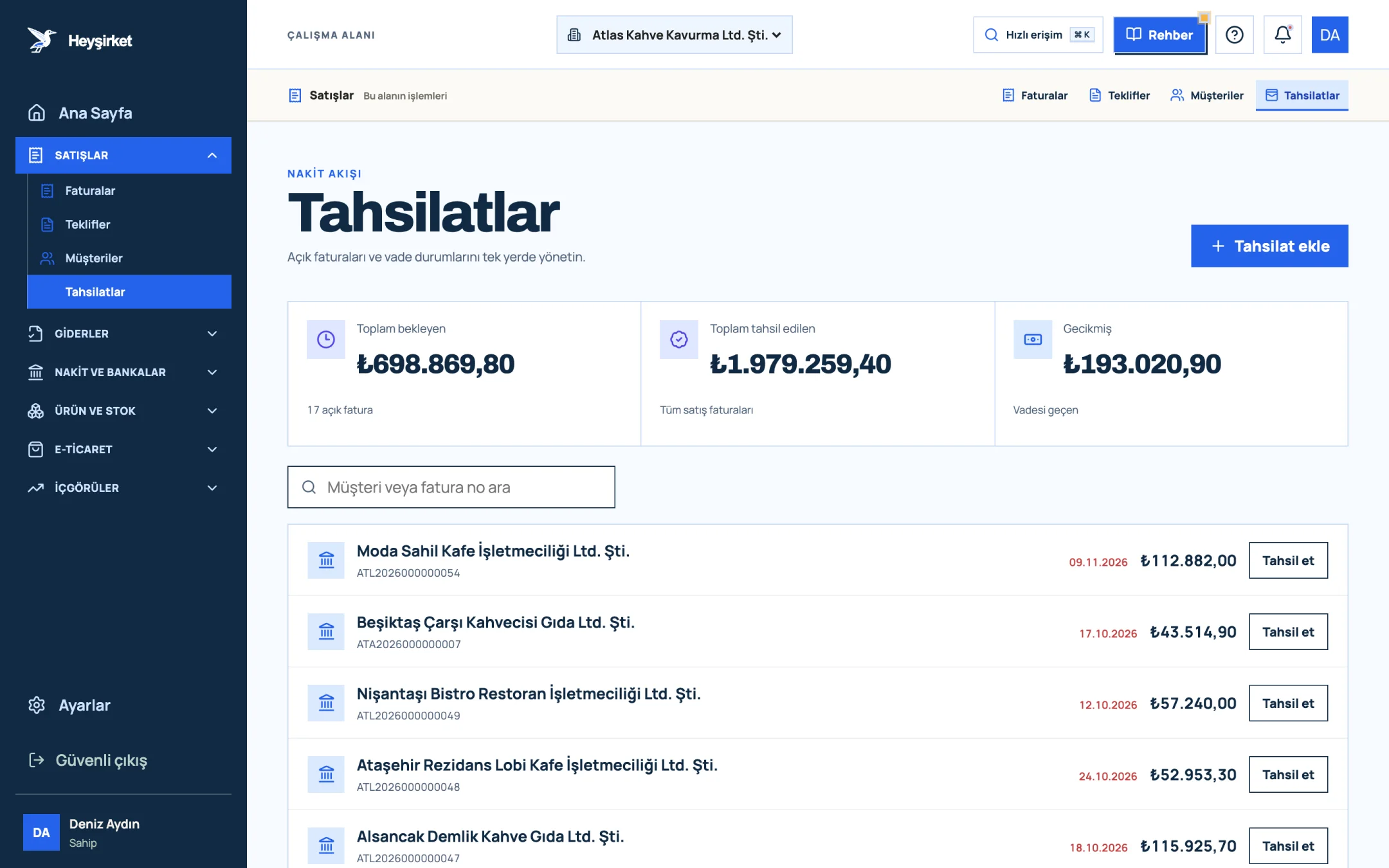
- 1. Add collection button
- 2. Total pending receivables
- 3. Total overdue receivables
- 4. Per-row Collect button
After receivables, it's time for the business's own assets: the machines and computers bought during the year, and the cash in the till.
Part 5 · Assets Depreciation, cash and bank: what do you check at year-end?
Depreciation (amortisman) is expensing the cost of assets that are used in the business for more than a year and whose value exceeds a certain threshold, by spreading it over their useful life. The year-end task is to list every asset bought during the year in full and determine which can be expensed directly and which are subject to depreciation.
- 12,000 TL Threshold for fixed assets that can be expensed directly in 2026 (excluding VAT, VUK 313)
- 31 December The day the stock and cash counts must be done
- 30 June Deadline for the closing certification of a paper journal ledger (calendar year)
| Machine cost (excluding VAT) | 1,200,000 TL |
|---|---|
| Example useful life (set by GİB's (Turkish Revenue Administration) depreciation list) | 10 years |
| Normal depreciation rate | 10% |
| Annual amount under the balance-sheet basis, even if bought in December | 1,200,000 × 10% |
| 2026 depreciation expense | 120,000 TL |
Under the balance-sheet basis, a full year's depreciation can be taken on assets other than passenger cars, whatever month they were bought; passenger cars are depreciated pro rata. Confirm the useful life and rate against GİB's current depreciation list with your mali müşavir.
Heyşirket doesn't include a depreciation module; your mali müşavir calculates depreciation. Your job is to make sure the invoice for every asset bought during the year is in the system and in the archive. To do that, check that no documents tagged Awaiting PDF remain in your expense list by the end of December.
Cash and bank
On the evening of 31 December, the cash in the till is counted and compared with the recorded balance; bank accounts are reconciled with the year-end statement. A high cash balance that appears in the records but isn't physically there is one of the items most often questioned in tax audits.
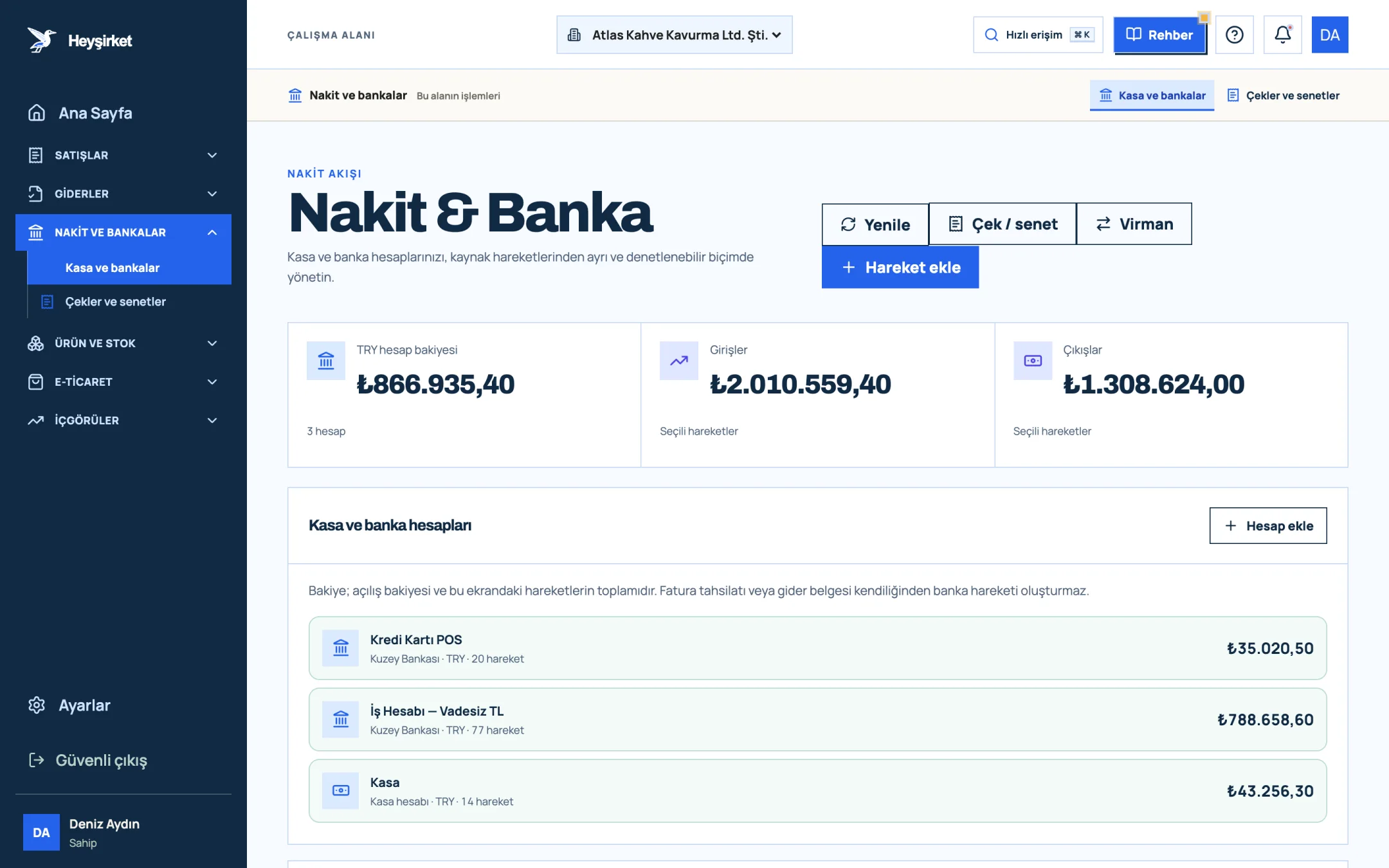
- 1. Add transaction button
- 2. Transfer between accounts
- 3. Total TRY balance
- 4. Cash and bank account list
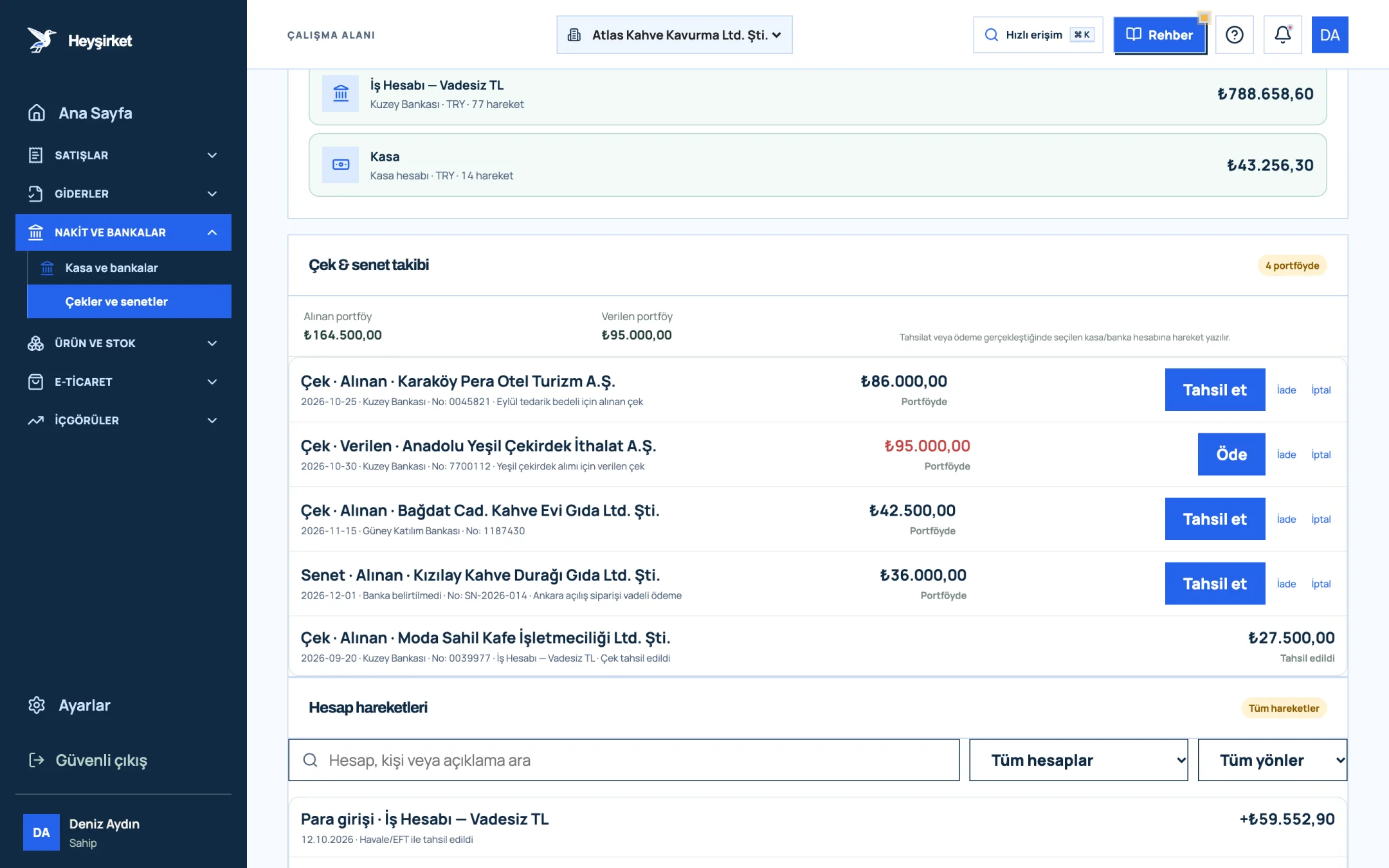
- 1. Received and issued portfolio summary
- 2. Received check in portfolio and Collect
- 3. Issued check and Pay
- 4. Collected check
Part 6 · Opening How do you prepare for the new year?
Preparing for the new year means accepting the closed year's finalised balances as opening figures and having the new period's ledgers, documents, permissions and plans ready in the first week of January. A good opening also makes the new year's first month-end close easier.
- Ledgers: if you keep paper ledgers, put the opening certification of the new year's ledgers and the closing certification of the closed year's journal on the calendar with your mali müşavir. Notary certification isn't required for e-Defter (electronic ledger) users; details are in the e-Defter and e-transformation article.
- Document filing: move the closed year's invoices, expense documents and contracts into a separate archive. Under VUK, ledgers and documents must be kept for five years starting from the calendar year following the year they relate to.
- Team permissions: remove access for employees who have left, and review the roles of your mali müşavir and finance team for the new year.
- Budget: prepare the table where you'll compare the closed year's actuals with the new year's budget. We explained the method in the annual budget planning article.
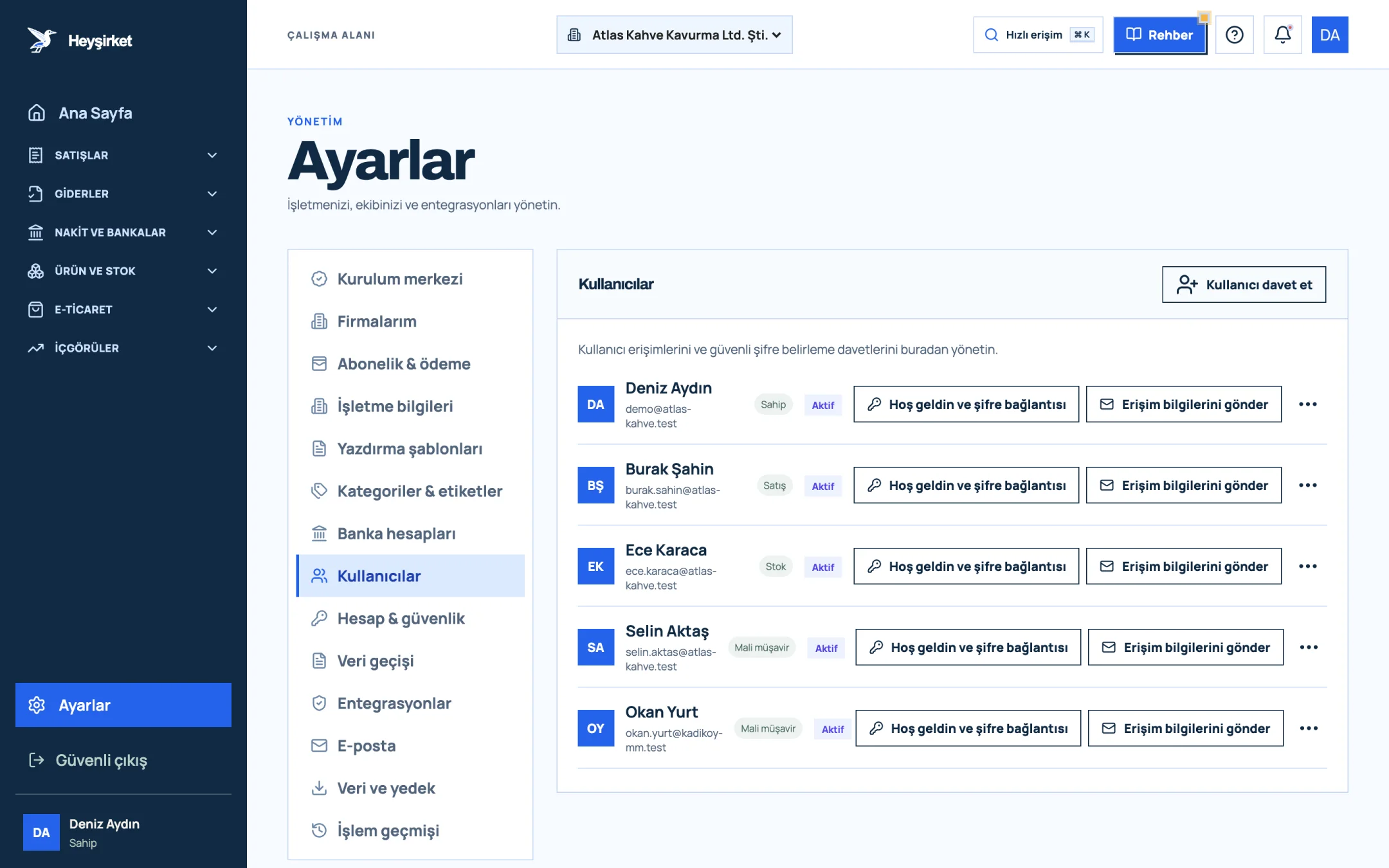
- 1. Invite user
- 2. User role (Owner, Sales, Stock, Accountant)
- 3. Send access details
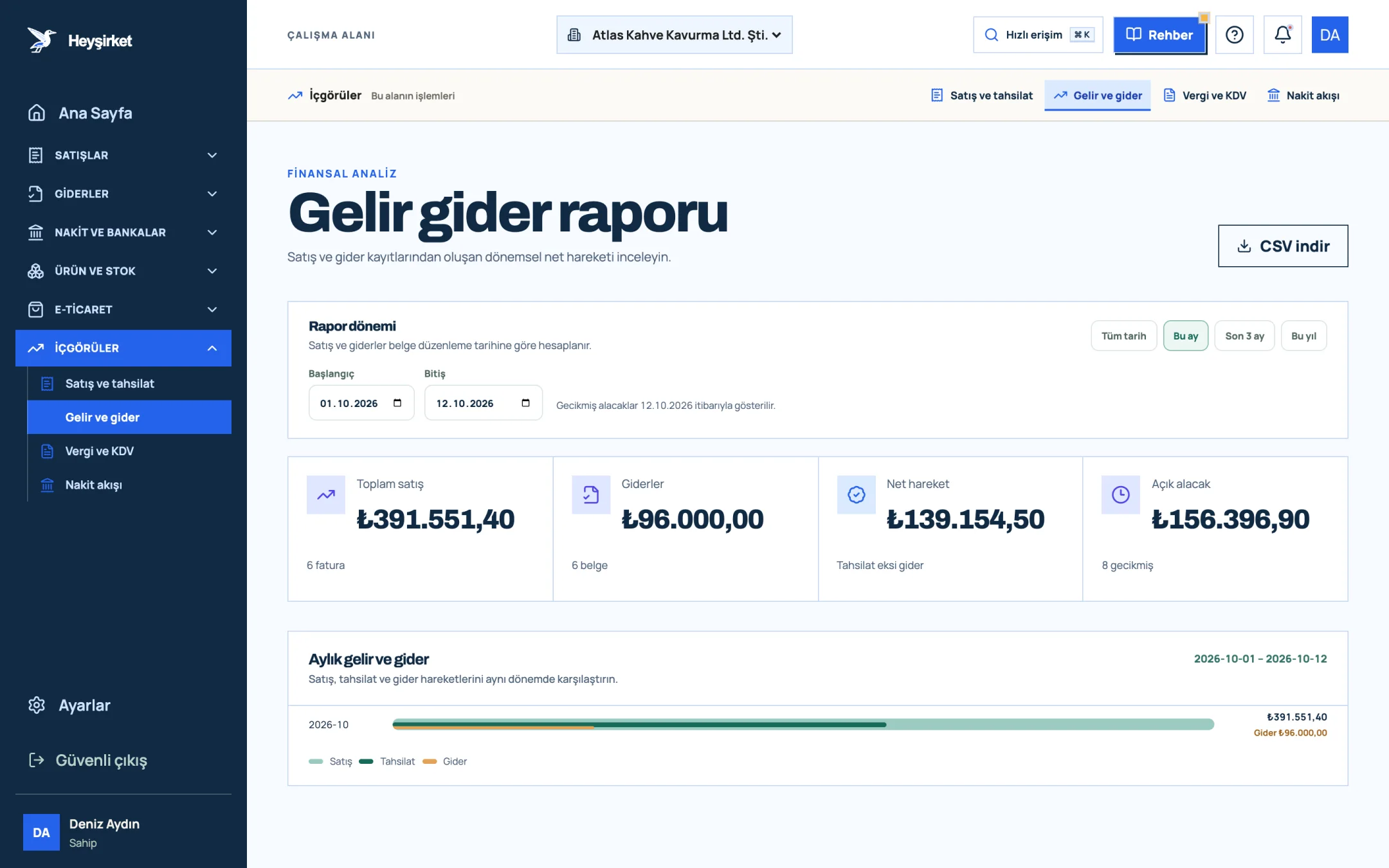
- 1. Total sales and expenses
- 2. Monthly income and expense chart
Part 7 · Checklist Printable year-end closing checklist
The year-end closing checklist gathers the tasks above on a single page, in date order and with a clear owner for each. Keep it next to your month-end list; in December you'll run both together.
Year-end close: December to January
- December, week 2: check that all delivery notes are invoiced, expense documents are entered and their PDFs are in the archive.
- December, week 2: plan reconciliation letters for the 31 December balance with your largest customers and suppliers.
- December, week 2: do a trial count of your best-selling products.
- December, week 3: tell your mali müşavir about receivables in litigation or enforcement, with their security status.
- December, week 3: list the invoices for fixed assets and machinery bought during the year.
- 31 December: do a physical stock count in every warehouse and enter it in the system the same day.
- 31 December: count the cash and check the status of received and issued cheques.
- January, week 1: reconcile bank accounts with the year-end statements.
- January, week 1: collect reconciliation replies and close any differences.
- January, week 1: hand the annual reports and documents over to your mali müşavir.
- January, week 2: finalise user permissions, ledger certifications and the new year's budget.
Every day you rush at year-end turns into a week in January and a month in a tax audit.
This year, Atlas Kahve's 31 December count was finished in two hours in the afternoon, because the trial count in mid-December had already caught the biggest differences. This time Okan Bey's 2 January message wasn't a question but a thank-you. You'll find how to divide the work with your mali müşavir in the working with your financial advisor article.
Does the year-end stock count have to be done on 31 December?
The envanter is done as of the balance sheet date; for businesses that use the calendar year as their accounting period, that's 31 December. If the count is done a few days before or after, the incoming and outgoing goods in between must be added to or subtracted from the count to document the position on 31 December. Agree on the approach with your mali müşavir.
Is enforcement required for a doubtful receivables provision?
Under VUK 323, receivables in litigation or enforcement are considered doubtful. Receivables too small to be worth litigation or enforcement can be considered doubtful if they remain unpaid despite a protest or more than one written request. No provision can be set aside for the secured portion.
Below what amount can fixed assets be expensed directly in 2026?
For 2026, the threshold for fixed assets that can be expensed directly is 12,000 TL excluding VAT. This amount is updated every year by the revaluation rate; confirm the new year's amount with your mali müşavir or from GİB announcements.
How do I enter a year-end stock count in Heyşirket?
In the Operations hub, open the Stock count window on the Stock and warehouses tab, choose the warehouse, enter the counted quantities and save with Complete count. Differences are posted to stock as a Count adjustment movement. The count date is the day you enter it, so enter the count on 31 December.
Are the year-end and month-end closes done on the same day?
December's month-end close is the first layer of the year-end close. The month-end checks are completed first, then the year-end tasks such as the stock count, reconciliation, doubtful receivables, depreciation and valuation are added. Details are in the month-end closing checklist article.
How many years do I need to keep documents?
Under the Tax Procedure Law, ledgers and documents are kept for five years starting from the calendar year following the year they relate to. Commercial law and other legislation may require longer periods; confirm the period that applies to your company with your mali müşavir.
Plan your year-end count Review your warehouses and stock records now; do a trial count in mid-December and enter the 31 December count in the system on the same day. Go to stock and warehouses
Author: Heyşirket Editorial Team